
-
2023/2024 JFA Japan Blue Saint Anime Jersey - Special Edition
Regular price £39.99 GBP"Regular priceUnit price per£111.99 GBP"-64% OFF £39.99 GBP"Sale -
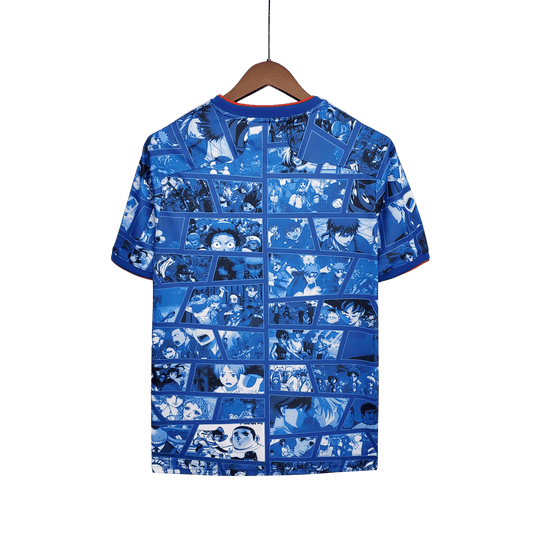
2023/2024 JFA Japan X Anime Blue Jersey - Special Edition
Regular price £39.99 GBP"Regular priceUnit price per£111.99 GBP"-64% OFF £39.99 GBP"Sale -
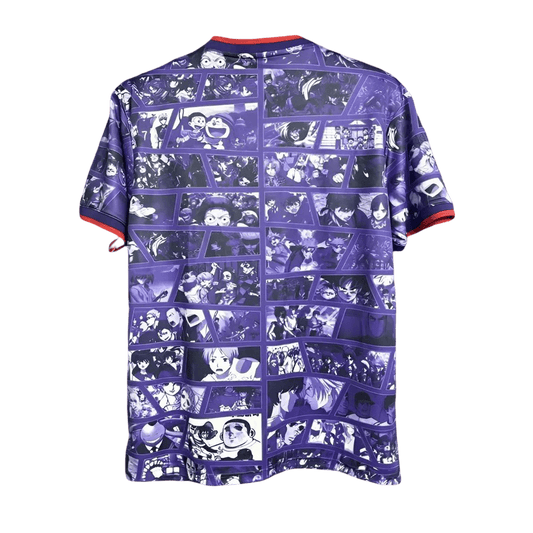
2023/2024 JFA Japan X Anime Purple Jersey - Special Edition
Regular price £39.99 GBP"Regular priceUnit price per£111.99 GBP"-64% OFF £39.99 GBP"Sale -
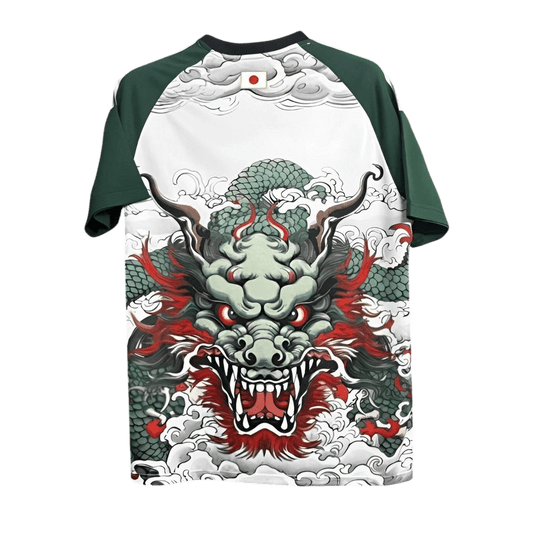
2024/2025 Japan Y3 Green White Dragon Jersey - Limited Edition
Regular price £39.99 GBP"Regular priceUnit price per£111.99 GBP"-64% OFF £39.99 GBP"Sale -
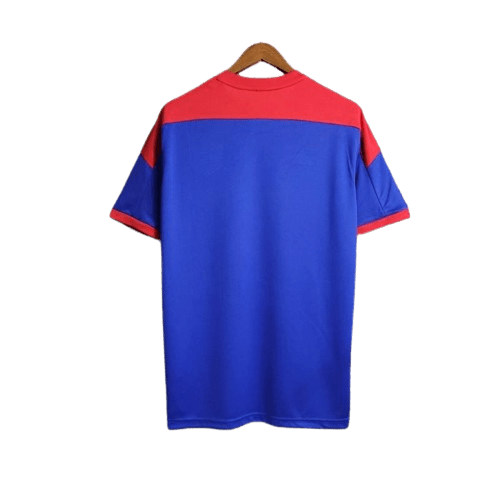
2024/2025 JFA Japan Y3 Blue Home Jersey - Special Edition
Regular price £39.99 GBP"Regular priceUnit price per£111.99 GBP"-64% OFF £39.99 GBP"Sale -
2024/2025 JFA Japan Y3 White Away Jersey - Special Edition
Regular price £39.99 GBP"Regular priceUnit price per£111.99 GBP"-64% OFF £39.99 GBP"Sale





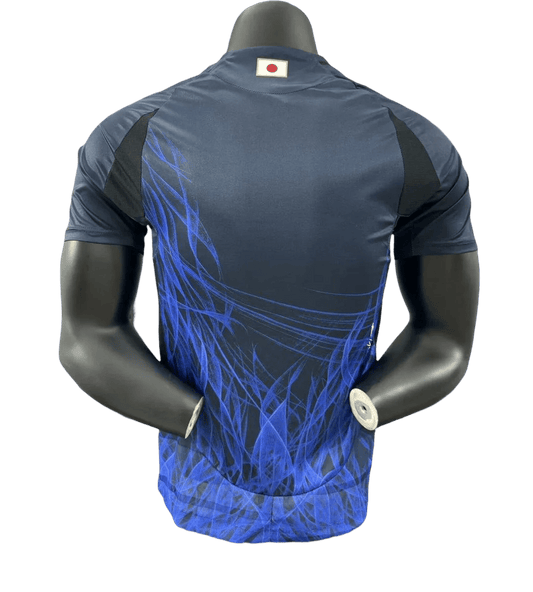

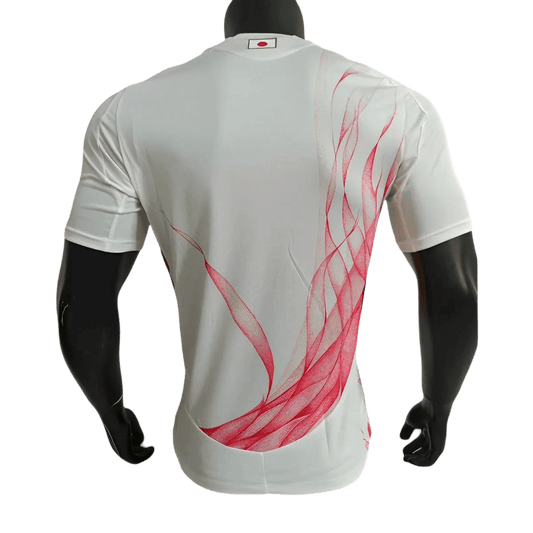
Japan Vintage Football Jerseys & Retro Soccer Kits at GoVintageJersey Store
The Japan national football team, known across Asia and the world as the Blue Samurai, is the most celebrated, most consistently excellent, and most globally admired national football program in the history of Asian football, and a sporting institution whose extraordinary transformation from continental outsider to World Cup regular and Asian powerhouse over the course of three remarkable decades represents one of the most inspiring stories of football development the global game has ever produced. A program that was competing at amateur level as recently as the 1980s has become the dominant force in Asian football and a genuine threat to the established powers of European and South American competition, qualifying for every FIFA World Cup since 1998 and repeatedly advancing from the group stage to produce results and performances that have commanded the respect of the entire football world. From the iconic deep blue of the national jersey to the greatest stages of the FIFA World Cup and the AFC Asian Cup, every Japan jersey tells a story of Samurai spirit, collective discipline, and a football philosophy that has absorbed the finest technical influences from Europe and South America and combined them with the particular work ethic, tactical intelligence, and collective commitment that Japanese sporting culture brings to every competitive endeavour. The Japan Vintage Football Jerseys & Retro Soccer Kits collection at GoVintageJersey Store celebrates that legacy, from the away kit of the pre-World Cup breakthrough era to the home designs of the first World Cup qualification and the subsequent AFC Asian Cup triumph that confirmed Japan's continental supremacy.
This collection brings together the full spectrum of Japan national team football kits, from rare retro and vintage jerseys that defined the foundational era of Japanese professional and international football, to classic replicas from legendary AFC Asian Cup campaigns and unforgettable FIFA World Cup qualification nights, all the way to the latest and newest Japan kits. At GoVintageJersey Store, every piece has been carefully selected and faithfully reproduced to honour the visual identity of Asia's most celebrated football nation, giving fans worldwide the chance to own a piece of Japan football history.
These jerseys belong to the category of vintage football jerseys and retro soccer kits spanning from retro and vintage to the latest and new, available exclusively at GoVintageJersey Store. Whether you are a dedicated collector hunting for a rare piece of the J.League founding era, a passionate fan looking to relive the historic first World Cup qualification of 1998 and the home tournament triumph of 2002, or a football enthusiast drawn to the iconic deep blue of Asia's most admired national team, this collection is made for you.
Japan National Football Team, Identity & Historical Portrait
The Japan Football Association was founded in 1921 and affiliated with FIFA in 1929, but the true story of Japanese football as a serious competitive force at the international level begins with the establishment of the J.League in 1993, the professional domestic competition that transformed Japanese football from a relatively obscure amateur activity into one of the most commercially sophisticated and technically ambitious football ecosystems in Asia. The decision to create the J.League, modelled on the European professional league structures that had produced the world's finest football, and accompanied by the recruitment of celebrated international players including Zico, Gary Lineker, and Pierre Littbarski as both commercial attractions and technical mentors, gave Japanese football the professional foundations that enabled the national team to develop rapidly enough to achieve consistent World Cup qualification within less than a decade of the league's formation. Based in Tokyo and representing a nation of 125 million people whose relationship with sport has always been defined by the pursuit of collective excellence, technical mastery, and the total commitment of the individual to the collective purpose, the Japan Football Association has always brought the deepest values of Japanese sporting culture to the development of the national team.
The Japan national team plays their home matches at a variety of venues across the country, with the Japan National Stadium in Tokyo, the Saitama Stadium, and the Nissan Stadium in Yokohama serving as the primary venues for the most significant international fixtures. The 2002 FIFA World Cup, co-hosted by Japan and South Korea and representing the first World Cup held in Asia, gave the entire country an experience of football at the highest level and produced the iconic image of Japanese supporters filling stadiums in their deep blue jerseys and creating one of the most extraordinary atmospheres the competition has ever witnessed. The visual identity of the Japan national team is built around the iconic deep blue home jersey, one of international football's most distinctive and immediately recognisable colour identities, a design that has evolved considerably since the early J.League era but that has maintained the deep blue colour that gives the Blue Samurai their name and that has become one of the most recognised national football identities in Asian sport.
In terms of honours and achievements, the Japan national team stands as the dominant force in the history of Asian football, with 4 AFC Asian Cup titles in 1992, 2000, 2004, and 2011, 9 consecutive FIFA World Cup qualifications from 1998 to 2026 representing the longest unbroken streak in Asian football, and a series of landmark World Cup performances including the Round of 16 appearance in 2002, the group stage victories over Germany and Spain in 2022 that produced two of the most celebrated upsets in the competition's recent history, and the consistently competitive group stage performances that have established Japan as one of the strongest national teams outside the traditional European and South American footballing powers. The legendary players to have represented the Blue Samurai include Kazuyoshi Miura, the founding hero of Japanese professional football who remains the oldest professional footballer in history, Hidetoshi Nakata, whose career at Perugia, Roma, and Fiorentina made him the most celebrated Japanese footballer in the history of European football, Shinji Kagawa, Keisuke Honda, Shunsuke Nakamura, Yasuhito Endo, Shinji Okazaki, Takefusa Kubo, and the extraordinary generation of Wataru Endo and Jude Bellingham's Premier League contemporaries who defeated Germany and Spain in Qatar.
To explore the full identity, design history, and cultural legacy of the Japan national team in depth, visit the dedicated Japan National Team, History, Achievements, and Iconic Jerseys page at GoVintageJersey Store, where you will find a complete archive of the national team's kits, eras, and visual evolution.
Blue Samurai Spirit, The Story Behind the Shirt
There are national teams that have always been expected to succeed, and there are national teams that have built their success from nothing in the space of a single generation and made the entire football world reassess what the Asian game is capable of producing. Japan belongs entirely to the second category, a national team that in the early 1990s was barely registering on the radar of international football and that by 2022 was defeating the world champions Germany and the 2010 champions Spain in the same group stage, sending one of the most powerful messages in the history of the competition about the development of football in parts of the world that Europe and South America had long underestimated. To wear the Japan deep blue is to carry the pride of that extraordinary transformation, to align yourself with the most dramatic and the most inspiring story of football development the Asian game has ever produced.
The away kit of 1995/1996 was worn during the pivotal pre-World Cup era when Japanese football was beginning to translate the commercial energy of the J.League's founding years into genuine international competitive quality. The J.League, founded in 1993 with Zico as its most celebrated ambassador, had given Japanese football its professional foundations, and the national team was beginning to reflect the improved technical quality and competitive intensity that the professional domestic competition had generated. This away design captures Japan at the moment of transition from ambitious outsider to serious continental competitor, the precise moment when the Blue Samurai were preparing to make the history that would follow in 1998.
The home kit of 1998/1999 was worn during the most celebrated single year in the history of Japanese football up to that point, encompassing the historic first World Cup qualification in France 1998 and the beginning of the preparation for the 2000 AFC Asian Cup campaign. The 1998 World Cup in France, where Japan qualified for the first time and faced Argentina, Croatia, and Jamaica in the group stage, represented the fulfilment of the promise of the J.League era and the beginning of Japan's sustained presence at the world's most prestigious football competition. The deep blue of 1998 carries the memory of a nation that had worked for decades to reach the World Cup and that finally stood on the biggest stage in global sport for the first time.
The home kit of 2000/2001 was worn during the AFC Asian Cup triumph of 2000, when Japan claimed their second continental title under Philippe Troussier and confirmed their status as the dominant force in Asian football. The 2000 Asian Cup, held in Lebanon, saw Japan defeat Saudi Arabia in the final and demonstrate the sustained quality that the J.League generation had produced, with a squad that balanced experienced international professionals with the emerging talent of the generation that would go on to represent Japan at the 2002 home World Cup with such distinction.
To relive these moments in full detail, explore the Blue Samurai Spirit : Rising Stories of Japan blog on GoVintageJersey Store, where every chapter of this magnificent story is told with the passion and depth it deserves.
Find Your Japan National Team Kits at GoVintageJersey Store
GoVintageJersey Store was built by football fans who refused to let history fade. Founded with a clear vision to make the most iconic football kits in history accessible to fans across the world, GoVintageJersey Store has grown into one of the most trusted destinations for retro, vintage, and classic football jerseys. As Asia's most celebrated and most consistently excellent national football team, Japan features in our dedicated Asian National Teams collection at GoVintageJersey Store, sitting proudly alongside the greatest national teams in Asian football history.
Our mission is simple: to reproduce the football kits that defined eras, shaped cultures, and made fans fall in love with the game, with a level of quality that honours the originals. Every Japan national team kit in our collection is crafted as a premium high-quality replica, faithful in its graphics, design details, colour accuracy, and finishing. The collection spans the full timeline of Japan football history, from the retro away kit of the pre-World Cup breakthrough era and the vintage home design of the first World Cup qualification season, through the 2000/2001 Asian Cup-winning home kit, to the latest contemporary Japan national team kits. Our customers, collectors in Tokyo, fans in Osaka and London, supporters of the Blue Samurai across Japan and the global Japanese diaspora, return because they trust our quality, our service, and our passion, backed by free worldwide shipping, a 30-day money-back guarantee, and secure payment processing.
Japan National Team Kits Through the Ages, From Retro & Vintage to New & Latest
Few national teams in world football have undergone a kit history as dramatic and as symbolically charged as Japan. The deep blue home jersey has evolved from a relatively obscure design worn by a team competing in Asian amateur competitions into one of the most recognisable and most admired national team designs in the world, a transformation that mirrors exactly the journey of the team itself from continental obscurity to world football relevance. The late 1980s and early 1990s saw the pre-professional era designs worn during the foundational Asian competitions that gave Japanese football its first competitive framework. The J.League founding era of the mid-1990s produced the home and away designs of the 1995/1996 season, worn as the professional league transformed the quality of Japanese football. The 1998 home kit accompanied the historic first World Cup qualification. The 2000/2001 home kit carried the Asian Cup champions. The 2002 home kit of the World Cup co-host era became the most iconic Japan design of the early professional era, worn during the nation's first Round of 16 appearance. Contemporary kits have accompanied the Kagawa, Honda, and post-2010 generations through World Cup campaigns and the extraordinary Qatar 2022 group stage where victories over Germany and Spain announced a new chapter in Japan football history. Each era carries specific memories, and the jerseys of the mid-to-late 1990s and early 2000s are among the most historically significant and emotionally resonant pieces in Asian football collecting worldwide.
The story of Japan's national team kit design across the decades reflects the extraordinary ambition and commercial sophistication of the Japan Football Association and the Adidas partnership that has clothed the Blue Samurai through their most celebrated years of international development. From the relatively simple designs of the pre-professional era through the technically sophisticated and increasingly globally celebrated designs of the J.League generation and the World Cup qualifying campaigns, each Japan kit has carried the visual identity of a nation that has always pursued technical excellence and aesthetic quality in equal measure. The mid-1990s and early 2000s designs represented a pivotal era when Japan's growing international presence was beginning to be reflected in kit designs of genuine visual distinction, making the jerseys of this period among the most collectible pieces in the history of Asian international football.
Among the most iconic pieces in the Japan national team collection at GoVintageJersey Store, these three kits stand out for their extraordinary historical significance:
- 1995/1996 Japan Away Retro Kit, worn during the pivotal pre-World Cup breakthrough era as the J.League's professional revolution was beginning to translate into genuine international competitive quality, this away design captures the Blue Samurai at the precise moment of transition from serious Asian competitor to imminent World Cup qualifier, carrying the memory of a programme that was about to make the most significant breakthrough in the history of Japanese football.
- 1998/1999 Japan Home Retro Kit, the most historically significant Japan jersey of the pre-2002 era, worn during the first World Cup qualification season that gave a nation of football lovers their first appearance on the grandest stage in global sport, this deep blue home design carries the memory of a programme that had worked for a generation to reach the World Cup and that finally stood alongside Argentina, Brazil, France, and Germany as a genuine participant in the greatest football competition on earth.
- 2000/2001 Japan Home Retro Kit, the shirt of the second AFC Asian Cup triumph, worn as Philippe Troussier's Japan defeated Saudi Arabia in the final in Lebanon and confirmed the Blue Samurai as the dominant force in Asian football, this home design connects the first World Cup era to the home tournament triumph that would follow in 2002 and represents the sustained quality of a national programme that was building towards the most celebrated chapter in its extraordinary story.
Craftsmanship Details & Features, Japan Vintage Football Jerseys & Retro Soccer Kits at GoVintageJersey Store
Every Japan national team jersey in the GoVintageJersey Store collection is produced to the highest standards of replica craftsmanship, designed to deliver an authentic visual and tactile experience that honours the original shirts. From the precision of the iconic deep blue design reproduction to the accuracy of national federation badges and competition details, each kit is built to be worn, collected, and displayed with pride. Here is what you can expect from every piece in this collection:
- Premium breathable polyester construction, lightweight and durable for wearing and display
- High-quality replica craftsmanship with faithful reproduction of original graphics and colorways
- Precision-accurate deep blue design with correct collar, badge, and sponsor placement for each era
- Period-accurate national federation badges and competition patches, correctly placed and reproduced
- Customization available on request, name, number, and special patches added with period-appropriate fonts
- Full adult size range from S to XXL and beyond, with a unisex fit suitable for all body types
- Wash-resistant colors and printed details designed to maintain their appearance over time
- Premium sublimated printing techniques ensuring sharp, vibrant, and long-lasting graphics
- Authentic collar and cuff detailing faithful to the original era of each kit
- Suitable for everyday wear, match days, gifting, or proud display in a personal collection
Japan Vintage Football Jerseys & Retro Soccer Kits at GoVintageJersey Store, Wear the Deep Blue of Asia's Greatest Football Nation
Some shirts are made of fabric. These are made of a generation's belief. Every Japan national team jersey in this collection carries a piece of something irreplaceable, a first World Cup qualification that made an entire nation weep with joy, an AFC Asian Cup lifted in Lebanon that confirmed the Blue Samurai as Asia's finest footballing nation, the Zico-inspired J.League revolution that built the professional foundations from which everything else was possible, and the extraordinary victories over Germany and Spain in Qatar 2022 that told the whole world what the Blue Samurai had become. At GoVintageJersey Store, we exist to make sure those memories are never just statistics in a qualification record or clips in a tournament archive. We make them wearable. Whether you are looking to own the away kit of the pivotal 1995/1996 pre-qualifying era, relive the home design of the historic first World Cup qualification season, celebrate the 2000/2001 Asian Cup-winning jersey, or simply wear the most inspiring deep blue in Asian football with pride, explore the full Japan Vintage Football Jerseys & Retro Soccer Kits collection at GoVintageJersey Store today, and wear your passion for the Blue Samurai with the quality and authenticity it deserves.
Buy With Confidence at GoVintageJersey Store
GoVintageJersey Store is trusted by football fans and collectors worldwide. From the quality of our premium replica kits to the reliability of our shipping and the transparency of our return policy, every order is backed by our commitment to your satisfaction. See what our customers say about their experience on our Trustpilot Reviews page and shop with the confidence you deserve.
FAQ, Common Questions About Japan National Team Football Kits Collection
1. Are the jerseys authentic or replica?
All our jerseys are premium replica editions created to reproduce the authentic look and feel of the originals. Production focuses on accurate graphics, correct badge placement and faithful stitching, so you receive a close-to-original experience. Choosing a premium replica delivers the visual fidelity of a classic shirt without the price of an original match-worn item. These jerseys are suitable for wearing, gifting or showcasing in a collection.
2. What sizes are available and how can I choose the right size?
We stock multiple adult sizes from S to XXL to accommodate different body types. To ensure the best fit, consult our Size Chart, which provides precise measurements and step-by-step instructions for measuring. Comparing your measurements to the chart will help you select the size that offers comfort and the intended vintage-style fit. If you are between sizes, consider whether you prefer a tighter or roomier look and choose accordingly.
3. Can I customize my Japan National Team Kit?
Yes, customization is available, you can add a name, number and patches to personalize the kit. Our custom prints use fonts and layouts that aim to reflect the period where appropriate, helping the finished shirt maintain an authentic replica appearance. Customization is carried out on request and checked for quality prior to dispatch, ensuring a personalized result that respects the original style.
4. What about the quality and materials of the jerseys?
These kits are produced as premium replica items using breathable polyester blends chosen for durability and comfort. The materials are selected to resist frequent washing and to preserve colors and printed details, so the shirt keeps its appearance over time. Whether you wear the jersey regularly or keep it for display, the construction and printing methods are designed to maintain a fresh look. Proper care according to the label will further extend the life of the garment.
5. Are there discounts if I buy multiple jerseys?
Yes, we regularly run promotions and bundle offers that provide discounts when you purchase multiple jerseys and depending on the promotion you may even receive a free jersey as part of your order. Seasonal events like Black Friday, Christmas, New Year, Valentine's Day, Spring Break and Summer sales often include our best deals and lowest prices. Stay tuned and subscribe to our newsletter to never miss an exclusive offer.
6. Which countries do you ship to and how long does delivery take?
We offer free worldwide shipping on eligible orders, making our kits available to fans across the globe. Standard delivery typically takes between 5 and 15 business days depending on your country, and we also offer an express shipping option with delivery in 3 to 5 business days for urgent orders. For exact delivery estimates by country, please consult our Shipping Policy.
7. Can I track my order?
Yes, every order includes a tracking number, which is sent within 2 to 3 days after your purchase is confirmed. Use the tracking number to monitor your parcel on our Track Your Order page, where you can follow each transit step until final delivery. Tracking provides visibility and an estimated arrival date for your convenience.
8. What if I am not satisfied with my Japan National Team Kits or if they arrive damaged?
We back orders with a 30-day return guarantee, so if the product is damaged or not as expected you may request a refund or exchange. Our returns process is straightforward and secure, simply contact customer support with your order details and photos if needed, and we will guide you through the next steps. For full instructions and terms, see our Return & Refund Policy.
9. Why choose GoVintageJersey Store to buy Japan National Team Kits?
GoVintageJersey Store is a trusted specialist in retro and vintage football jerseys, with proven expertise in producing faithful premium replica kits. We provide a broad size range, optional customization, free worldwide shipping on eligible orders, competitive pricing to make classic jerseys accessible, dedicated customer support, secure payment processing, tracking for every order, and a 30-day return guarantee. Buying from us means choosing a retailer that combines passion for football heritage with reliable service and quality craftsmanship.
10. Do you have articles or guides I can read?
Yes, we publish nostalgic articles that tell the stories behind retro jerseys, national team histories, and topical pieces about new kits. We also post practical guides on jersey care, styling ideas, and deep dives into specific tournaments and eras. These articles are updated regularly, and you can explore them on our Blog Posts page for more reading and inspiration.
11. What can I find in the Football Kits Knowledge & Archives Page?
Visit the Football Kits Knowledge & Archives to explore national team histories, tournament timelines, iconic kits and deep-dive articles that narrate the design and cultural story of football's greatest national shirts.
Blog posts
View all-

Premier League Stories: Glory, Drama and Iconic...
Premier League Stories: Glory, Drama and Iconic Kits Where Football Became the World's Game There is a Saturday afternoon feeling that belongs entirely to English football. The floodlights coming on...
Premier League Stories: Glory, Drama and Iconic...
Premier League Stories: Glory, Drama and Iconic Kits Where Football Became the World's Game There is a Saturday afternoon feeling that belongs entirely to English football. The floodlights coming on...
-

The Boy Who Never Stopped: Lionel Messi and the...
The Boy Who Never Stopped: Lionel Messi and the Weight of Greatness The Player Who Carried Everything and Never Put It Down There is a moment from the 2022 World...
The Boy Who Never Stopped: Lionel Messi and the...
The Boy Who Never Stopped: Lionel Messi and the Weight of Greatness The Player Who Carried Everything and Never Put It Down There is a moment from the 2022 World...
-

The Hand of God and the Feet of a Legend: Diego...
The Hand of God and the Feet of a Legend: Diego Maradona's Eternal Story The Man Who Made Football Feel Like Destiny There are four minutes in June 1986 that...
The Hand of God and the Feet of a Legend: Diego...
The Hand of God and the Feet of a Legend: Diego Maradona's Eternal Story The Man Who Made Football Feel Like Destiny There are four minutes in June 1986 that...


