Il Fenomeno: The Day Ronaldo Nazário Made the World Hold Its Breath
The Player Who Made the Impossible Look Easy
There is a goal from the 1998 World Cup that football supporters of a certain generation describe the way others describe works of art. Ronaldo Nazário receives the ball thirty yards from goal against Morocco, takes four touches that somehow cover forty metres, leaves three defenders standing in his wake, and finishes with a precision that makes the goalkeeper look almost irrelevant. The whole sequence lasts approximately six seconds. In those six seconds, you understand everything. The acceleration that no defender of that era could match. The balance that allowed him to change direction at full speed without losing a fraction of momentum. The finishing that was not merely accurate but inevitable, the kind that suggests the ball had no choice but to go exactly where it went. That was Ronaldo Nazário. That was Il Fenomeno.
Explore his full legacy, career milestones, and the iconic jerseys he made legendary on our dedicated Ronaldo Nazário – Il Fenomeno, Career, and Iconic Jerseys page.
From Bento Ribeiro to the World: A Childhood Spent Running
Ronaldo Luís Nazário de Lima was born on September 18, 1976, in Bento Ribeiro, a working-class neighbourhood in the northern zone of Rio de Janeiro. He grew up in genuine poverty, in a city where football was not recreation but survival, the one path out of circumstances that offered very little else. He played barefoot on concrete pitches and in dusty futsal courts, developing the close control and explosive movement that would later make the world's finest defenders look ordinary. His father left when he was young. His family struggled. But the football was always there, and it always responded to him in a way that it did not respond to others.
He was spotted by Jairzinho, the Brazilian legend from the 1970 World Cup, playing futsal at fourteen. Within months he was at Cruzeiro. By sixteen he was scoring professional goals. By seventeen he was in Brazil's 1994 World Cup squad, not yet playing but absorbing, watching, understanding what winning at the highest level required. By eighteen he was at PSV Eindhoven. By nineteen he was at Barcelona. By twenty he was the best player on the planet.
Barcelona: Where the World First Understood
The single season Ronaldo spent at FC Barcelona 1996/1997 remains one of the most extraordinary individual campaigns in the history of European football. He arrived as a teenager from PSV, already carrying significant expectation. What he produced was something that even the most optimistic Barcelona supporter had not quite anticipated: 47 goals in 49 appearances, a Copa del Rey, a UEFA Cup Winners' Cup, and performances that made every defender he faced look fundamentally underprepared.
In the Camp Nou, wearing the distinctive turquoise away kit of that era, he produced moments that the Barcelona crowd, accustomed to greatness, rarely surprised by it, greeted with the kind of disbelieving roar usually reserved for things that should not be possible. He won the FIFA World Player of the Year award at the end of that season. He was nineteen years old. Barcelona wanted to keep him. Instead, he left for Inter Milan, and the football world shifted on its axis.
The Moments That Defined a Career
Inter Milan: The Pinnacle Before the Fall
At Inter Milan between 1997 and 2002, Ronaldo produced football that those who watched it still struggle to describe without reaching for language that sounds excessive. His first season at the San Siro, the 1997/1998 campaign in the famous PIRELLI-sponsored home kit, was a statement of intent: 25 goals in 32 Serie A appearances, a UEFA Cup, and a level of individual performance that made the entire Italian football world stop and acknowledge that something genuinely unprecedented had arrived. He was fast beyond what defenders had been trained to cope with. He was strong enough to run through challenges that should have stopped him. He finished with both feet, with his head, from distance, from tight angles, in ways that made the selection of technique look almost arbitrary, as if it simply did not matter which method he chose because all of them would work.
The 1998 World Cup: Genius and Mystery in France
The 1998 World Cup in France carried Ronaldo to the final against the host nation, and then delivered one of football's most enduring and unresolved stories. Hours before the final, he suffered what was described as a convulsive fit, the circumstances of which have never been fully clarified. He was initially left out of the starting lineup. Then he was reinstated. He played. Brazil lost 3-0. Ronaldo was a shadow of himself, visibly and profoundly affected by whatever had happened in those hours before kickoff. The mystery of that evening, what happened, why, who made which decisions, has never been satisfactorily answered. It remains one of football's most human and troubling stories: a player at the summit of his powers, undone by something entirely beyond the reach of his extraordinary ability.
The Injuries: Years Stolen, Character Revealed
Between 1999 and 2002, Ronaldo suffered two catastrophic knee injuries that collectively kept him away from football for almost three years. The first, in November 1999, ruptured the patellar tendon in his left knee. The second, in April 2000, during his comeback, in only his second match back, tore the same tendon again before he had played thirty minutes of football. For most players, the second injury would have ended a career. For Ronaldo, it became the foundation of the most remarkable comeback in football history. He returned. He rebuilt. He went to the 2002 World Cup as a player who had been away from the game for years, carrying a body that had been through more surgical reconstruction than any elite athlete should survive, and he became the tournament's greatest player.
Korea/Japan 2002: Redemption Written in Gold
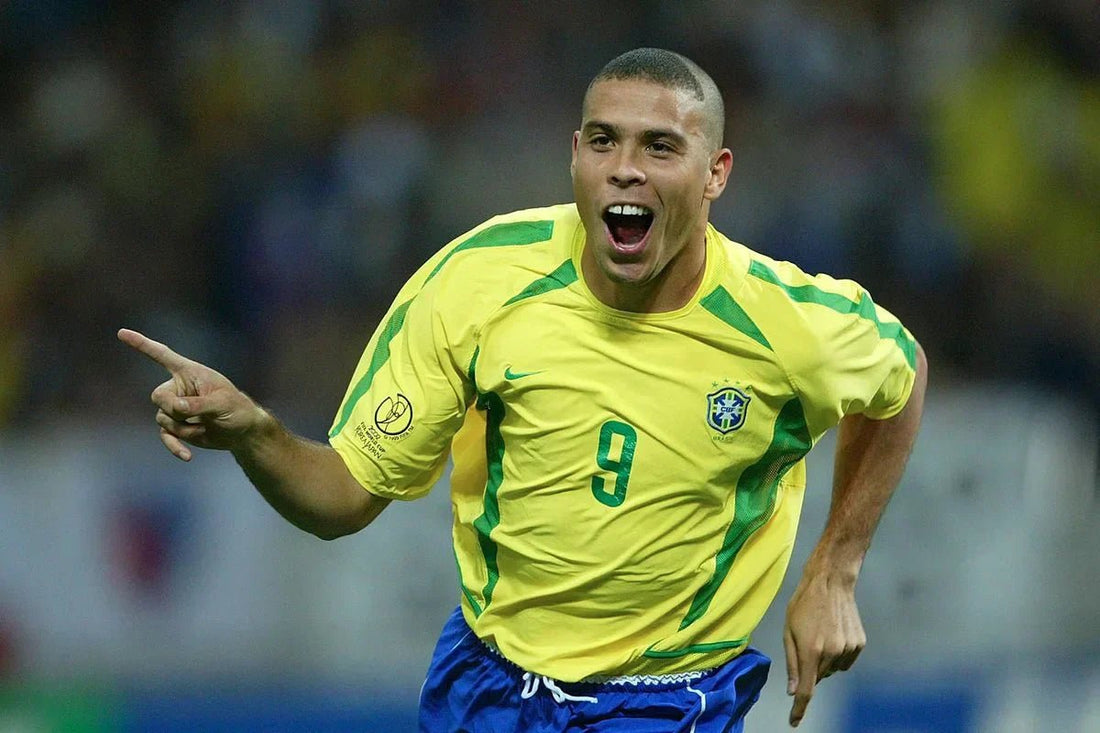
The 2002 World Cup belongs to Ronaldo Nazário in the way that 1994 belongs to Baggio and 1986 belongs to Maradona. He scored eight goals across the tournament, including both in the final against Germany. He arrived in Asia as a player the world had half-written off too injured, too long absent, the extraordinary body perhaps finally broken beyond repair. Instead, he produced a tournament of such relentless, joyful, devastating quality that it retroactively answered every question the previous three years had raised. The image of him in the yellow Brazil shirt, after the final whistle in Yokohama, weeping with a completeness that suggested years of pain finally releasing, that image is one of the most powerful in football's modern history. The haircut helped too.
Real Madrid: The Final Chapters of a Legend
Ronaldo joined Real Madrid in 2002 and spent five years at the Bernabéu, winning La Liga twice and scoring 104 goals in 177 appearances. His pace had diminished from its absolute peak, inevitably, given what his body had endured. But the finishing remained extraordinary, and the ability to produce decisive moments in the matches that mattered most never left him. He remains Real Madrid's fourth highest scorer of all time. In a squad containing Zidane, Figo, Beckham, and Raúl, he was still the player opposing defenders feared most.
The Jersey and the Man: Three Shirts, Three Chapters
Ronaldo Nazário's story is written across three jerseys, each representing a distinct and irreplaceable moment in his journey. The turquoise of Barcelona holds the season in which the world first truly understood what he was nineteen years old, 47 goals, a city falling completely in love with a teenager from Rio. The black and blue of Inter Milan carries the years of his absolute peak: the PIRELLI-sponsored home shirt from 1997/1998, the UEFA Cup, and the performances that made Serie A defences look fundamentally underprepared. The yellow of Brazil in 2002 contains everything: the injuries survived, the years lost, the redemption delivered, and the tears after the final whistle in Yokohama. To hold any one of these shirts is to hold a chapter of football history that will never be repeated. Explore the full archive of his most iconic shirts on our Ronaldo Nazário Legend & Kits History page.
Why Il Fenomeno Remains Unrepeatable
Football has produced faster players since Ronaldo. It has produced more technically refined players, more consistent players, players with better defensive work rates and higher pressing statistics. What it has not produced, and what makes Ronaldo Nazário's place in the game's history secure regardless of how the sport evolves, is a striker who combined his specific qualities in his specific way. The acceleration from standing to full speed in two touches. The strength that made him almost impossible to knock off the ball at pace. The finishing that was not just accurate but creative, as if he was inventing new ways to score in real time. And beneath all of it, the joy, the visible, infectious, completely genuine pleasure he took in doing things that no one else could do. That combination existed once. It was called Il Fenomeno. And it has not existed since.
Craft, Passion & Heritage
At GoVintageJersey Store, we believe that certain football jerseys carry a weight that goes beyond fabric and stitching. The Ronaldo Nazário shirts in our collection belong to that category: pieces that absorbed moments of such singular brilliance that holding them feels like holding a fragment of something irreplaceable. We source, preserve, and present these jerseys with the care they deserve, for collectors who understand their value, and for fans who simply want to feel connected to the football that made them fall in love with the game.
Explore Iconic Ronaldo Nazário Kits at GoVintageJersey Store
Three jerseys. Three chapters. One of the most extraordinary careers in the history of football. Browse the complete Ronaldo Nazário Collection and find the shirt that speaks to your chapter of his story.
This is the shirt of the season that introduced Ronaldo Nazário to the world. One year at Barcelona. Forty-seven goals. Nineteen years old. The turquoise away kit from 1996/1997 carries the electric, almost disbelieving energy of a Camp Nou crowd watching a teenager do things that defenders twice his experience could not stop. It is the jersey of a beginning so extraordinary that it would have been enough on its own, even without everything that followed. For collectors who understand that some first chapters are more powerful than entire careers, this shirt is essential.

The black and blue PIRELLI shirt from Inter Milan's 1997/1998 season is the jersey of Ronaldo at his absolute, uninjured, unrestricted peak. Twenty-one years old. Twenty-five Serie A goals. A UEFA Cup. And performances across the San Siro and away grounds throughout Italy and Europe that made the football world run out of superlatives. This is the shirt he wore when the question was not whether he was the best player on the planet, that had already been answered, but simply how much further he could go. It remains one of the most coveted pieces in any serious collection of 1990s football history.

If any shirt in football history carries the full weight of a comeback story, it is the yellow Brazil home kit from the 2002 World Cup in Korea and Japan. Ronaldo arrived at that tournament having spent nearly three years rebuilding a body that had been broken twice by the same catastrophic injury. He left it as the tournament's top scorer, with eight goals, including both in a World Cup final victory over Germany. The yellow shirt from that campaign is not simply a piece of football memorabilia. It is a document of human resilience, proof that the most extraordinary talent, combined with the most extraordinary will, can survive almost anything and still return to produce something beautiful.

The GoVintageJersey Story: Guardians of the Game
GoVintageJersey Store was built on the conviction that football's greatest moments deserve to be preserved with genuine care and historical understanding. We are collectors, historians, and fans, people who know that a Ronaldo Nazário shirt is not a product but a piece of the game's permanent record. We source these jerseys as the artefacts they truly are, present them with the honesty and depth their history demands, and offer them to those who understand that some stories are too important to be forgotten.
Finale: Il Fenomeno Lives Forever
Ronaldo Nazário retired from professional football in 2011. The debate about where he sits among the game's all-time greats has never stopped, and it never will. What is beyond debate is the feeling he produced in stadiums, on television screens, in the memories of supporters who watched him play and have never quite seen anything like it since. If you want to hold a piece of that feeling, to own one of the shirts that carried those moments, begin here. Browse the complete Ronaldo Nazário Football Kits Collection and let Il Fenomeno's story become part of yours.
Frequently Asked Questions
Why is Ronaldo Nazário called Il Fenomeno?
The nickname was given to him during his time at Barcelona and Inter Milan in the mid-to-late 1990s, when his combination of pace, strength, close control, and finishing was so far beyond anything defenders had encountered that the football world simply ran out of conventional descriptions. Il Fenomeno — The Phenomenon — was the only word that seemed adequate.
What happened to Ronaldo before the 1998 World Cup final?
Hours before the final against France, Ronaldo suffered what was reported as a convulsive fit in his hotel room. He was initially omitted from the starting lineup, then reinstated shortly before kickoff. The full circumstances have never been officially confirmed. He played but was visibly affected throughout, and Brazil lost 3-0. It remains one of football's most enduring and unresolved mysteries.
How did Ronaldo return from two catastrophic knee injuries?
Through years of surgical rehabilitation, physical reconstruction, and a determination that those who worked with him during that period described as exceptional even by elite athletic standards. His return at the 2002 World Cup, where he scored eight goals and won the tournament, is widely considered the greatest comeback in football history.
Which Ronaldo Nazário jersey is most sought after by collectors?
The 2002 Brazil World Cup home kit carries the greatest emotional weight, directly tied to his redemption tournament and World Cup victory. The 1997/1998 Inter Milan PIRELLI home shirt is equally prized for representing the peak of his powers before injury intervened.
Do you have original football stories about Ronaldo Nazário I can read?
Yes, visit our Blog Posts to discover narrative-driven stories about Ronaldo Nazário, football legends, unforgettable matches, and the emotional history of the kits you love.